Skip to content

Industrial Pharmacist

  • Home
  • Blog
  • Forums
  • Courses
  • Calculation
  • About Us
  • Privacy Policy
  • ANDA
  • ADL
  • FRD
  • QbD
  • QA
  • QC
  • RA
  • FDA
  • VS
  • SCM
  • Q&A
  • Dissolution
  • Data Integrity
  • Validation
  • Manufacturing
  • Packaging
  • Microbiology
Industrial Pharmacist
  • Factors Affecting Tablet Compression
    Compression

    Factors Affecting Tablet Compression

    Byipharmacist June 13, 2025

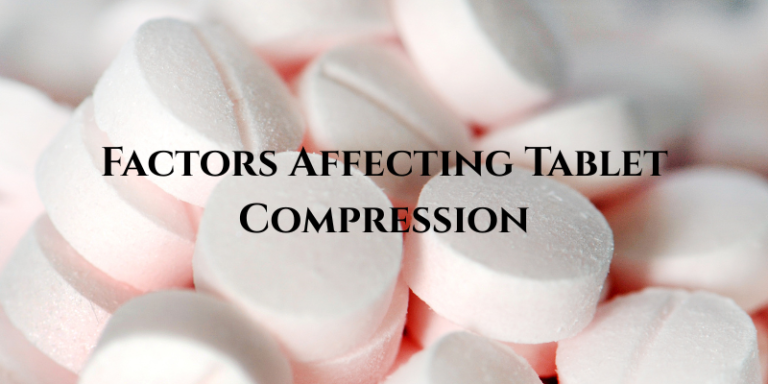
    Tablet compression is a complex process influenced by multiple critical factors, including: Material Properties: Particle size, shape, flowability, and moisture content of the powder blend Compression Force: Magnitude and duration of pressure applied by the punches Lubrication: Type and amount of lubricant used to reduce friction and prevent sticking Die & Tooling: Surface finish, clearance,…

    Read More Factors Affecting Tablet CompressionContinue

  • Chemistry of Epoxy Coatings
    Facility

    Chemistry of Epoxy Coatings

    Byipharmacist May 23, 2025May 23, 2025

    Epoxy coatings are primarily based on epoxy resins, which contain reactive epoxide groups, and curing agents (hardeners) that facilitate crosslinking. The most common types of epoxy resins include: Bisphenol A-Based Epoxies: The most widely used class, offering excellent mechanical strength, adhesion, and chemical resistance. Bisphenol F-Based Epoxies: Provide lower viscosity and improved chemical resistance, often…

    Read More Chemistry of Epoxy CoatingsContinue

  • Six Sigma in Pharmaceutical Project Management
    Uncategorized

    Six Sigma in Pharmaceutical Project Management

    Byipharmacist May 21, 2025May 23, 2025

    Six Sigma is a data-driven methodology aimed at improving business processes by reducing defects, variations, and inefficiencies. It was originally developed by Motorola in the 1980s and later popularized by companies like General Electric. Six Sigma uses a structured approach to problem-solving and decision-making, primarily through two methodologies:- Establish Leadership Commitment : Define Goals &…

    Read More Six Sigma in Pharmaceutical Project ManagementContinue

  • Difference Between ISO Standards and EU GMP Annex 1
    QA | VS

    Difference Between ISO Standards and EU GMP Annex 1

    Byipharmacist May 21, 2025

    The difference between ISO standards and EU GMP Annex 1 regarding airflow velocity measurement points is a common source of confusion in qualifying HEPA filter velocity is measured in both cleanrooms and laminar airflow (LAF) especially in Grade A areas. Air velocity is crucial to maintain cleanliness and prevent contamination at clean room but for…

    Read More Difference Between ISO Standards and EU GMP Annex 1Continue

  • Why Potentiometer Electrode Regeneration is Essential?
    Instrument

    Why Potentiometer Electrode Regeneration is Essential?

    Byipharmacist May 2, 2025May 2, 2025

    Potentiometers are critical for precise electrochemical measurements, but their electrodes degrade over time due to chemical reactions, contamination, and surface wear. Regenerating these electrodes is crucial to maintain accuracy, sensitivity, and longevity. The Science Behind Electrode Regeneration Surface Contamination & Passivation: Electrode Degradation in Harsh Environments: Restoring Electrode Performance: Regular regeneration ensures stable potential readings,…

    Read More Why Potentiometer Electrode Regeneration is Essential?Continue

  • Titration in Pharmaceutical Industry
    Analytical Development

    Titration in Pharmaceutical Industry

    Byipharmacist May 2, 2025May 2, 2025

    Titration is a laboratory technique used to determine the concentration of an unknown substance by reacting it with a known substance. Here’s an overview: Types of Titration Titration Process Key Concepts Applications Common Titration Techniques Read also: Resource Person: Susmita

    Read More Titration in Pharmaceutical IndustryContinue

  • Why is KCl Used for Conductivity Calibration?
    Calibration

    Why is KCl Used for Conductivity Calibration?

    Byipharmacist May 2, 2025May 2, 2025

    Potassium chloride (KCl) is the most commonly used standard solution for conductivity calibration because of its well-defined and reproducible conductivity values. Reasons for Using KCl in Conductivity Calibration Stable and Reproducible Conductivity Widely Accepted Standard Minimal Ion Interference Temperature Compensation Easy to Prepare and Store Typical KCl Conductivity Standards at 25°C KCl Molarity (M) –…

    Read More Why is KCl Used for Conductivity Calibration?Continue

  • Conductivity Meter in Pharmaceutical Industry
    Instrument

    Conductivity Meter in Pharmaceutical Industry

    Byipharmacist May 2, 2025

    It is a device used to measure the electrical conductivity of a liquid, which indicates its ability to conduct electricity. This measurement is commonly used to assess water purity, detect contamination, and monitor chemical concentrations in various industries. Key Components of a Conductivity Meter: Applications: Units of Measurement: Types of Conductivity Meters: Choosing the Right…

    Read More Conductivity Meter in Pharmaceutical IndustryContinue

Page navigation

Previous PagePrevious 1 2 3 4 5 … 43 Next PageNext

Popular Articles

  • Calculation of Peak Purity in HPLC

    Calculation of Peak Purity in HPLC

  • Analytical Method Validation | Avoiding Common Pitfalls in CTD Submissions

    Analytical Method Validation | Avoiding Common Pitfalls in CTD Submissions

  • Ensuring Compliance with 21 CFR Part 11 in Pharmaceutical Industry

    Ensuring Compliance with 21 CFR Part 11 in Pharmaceutical Industry

  • Audits in the Pharmaceutical Industry | Internal vs External

    Audits in the Pharmaceutical Industry | Internal vs External

  • USFDA Complaint Laboratory KPIs Measurements

    USFDA Complaint Laboratory KPIs Measurements

  • Difference Between Generic ANDA and 505(b)(2) Submissions

    Difference Between Generic ANDA and 505(b)(2) Submissions

  • Difference Between Disinfection and Sterilization

    Difference Between Disinfection and Sterilization

  • Key Elements of an Analytical Worksheet

    Key Elements of an Analytical Worksheet

  • Interview Questions and Answers on GMP

    Interview Questions and Answers on GMP

  • Quality by Design (QbD) and Design Space in Pharmaceutical Development

    Quality by Design (QbD) and Design Space in Pharmaceutical Development

  • CPP and CQA in Different Stages of Drug Product Manufacturing

    CPP and CQA in Different Stages of Drug Product Manufacturing

  • FDA Recall Classification System

    FDA Recall Classification System

  • Analytical Test Method Validation and Verification

    Analytical Test Method Validation and Verification

  • GLP vs GMP vs GCP | Similarities and Differences

    GLP vs GMP vs GCP | Similarities and Differences

  • Pharmaceutical Validation Interview Questions and Answers

    Pharmaceutical Validation Interview Questions and Answers

  • Difference Between Purity and Potency

    Difference Between Purity and Potency

  • Difference Between RLD and RS

    Difference Between RLD and RS

  • USFDA Databases

    USFDA Databases

  • Regulatory Requirements for Reprocess and Re-work

    Regulatory Requirements for Reprocess and Re-work

  • What Does FDA Regulate?

    What Does FDA Regulate?

© 2025 Industrial Pharmacist

  • Privacy Policy
  • DMCA
  • Contact Us
Industrial Pharmacist
Manage Consent
To provide the best experiences, we use technologies like cookies to store and/or access device information. Consenting to these technologies will allow us to process data such as browsing behavior or unique IDs on this site. Not consenting or withdrawing consent, may adversely affect certain features and functions.
Functional Always active
The technical storage or access is strictly necessary for the legitimate purpose of enabling the use of a specific service explicitly requested by the subscriber or user, or for the sole purpose of carrying out the transmission of a communication over an electronic communications network.
Preferences
The technical storage or access is necessary for the legitimate purpose of storing preferences that are not requested by the subscriber or user.
Statistics
The technical storage or access that is used exclusively for statistical purposes. The technical storage or access that is used exclusively for anonymous statistical purposes. Without a subpoena, voluntary compliance on the part of your Internet Service Provider, or additional records from a third party, information stored or retrieved for this purpose alone cannot usually be used to identify you.
Marketing
The technical storage or access is required to create user profiles to send advertising, or to track the user on a website or across several websites for similar marketing purposes.
Manage options Manage services Manage {vendor_count} vendors Read more about these purposes
View preferences
{title} {title} {title}
  • Home
  • Blog
  • Forums
  • Courses
  • Calculation
  • About Us
  • Privacy Policy